By George Cardenas
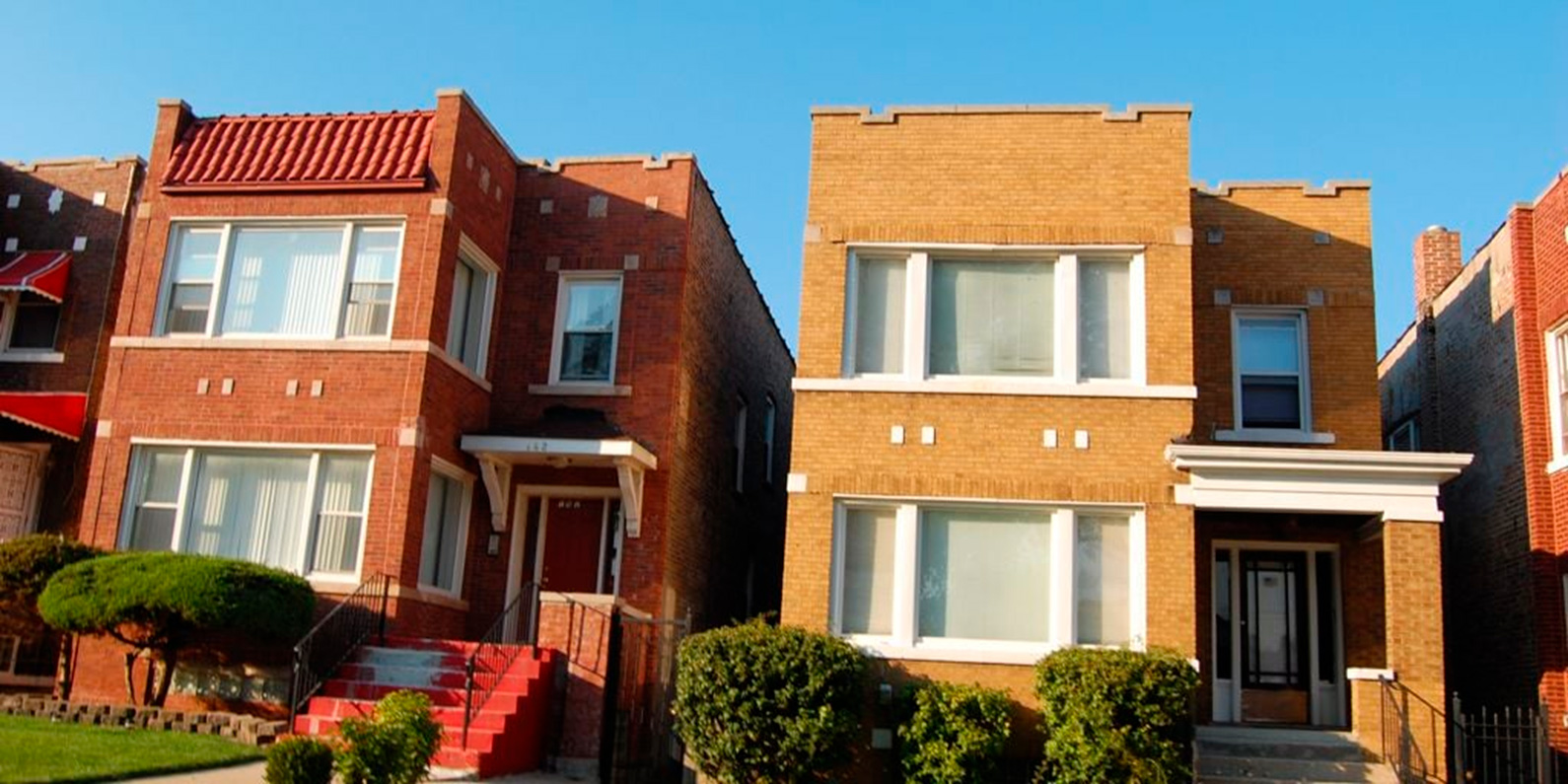
Credit: Eric Allix Rogers/Flickr
Crain’s Chicago Business
May 27, 2025 03:38 PM
Cook County Assessor Fritz Kaegi’s May 20 press release attacking the Cook County Board of Review (BOR) and referenced in a Crain’s report significantly misrepresents the BOR’s role in valuations and the property tax system. The press release asserts that the BOR shifts the property tax burden to Chicago homeowners. Simply, as it is based on false premises, his conclusion is not true.
To better understand the dynamics at play in property tax bills, taxpayers deserve clarity and accurate context. First, the BOR has a clearly defined responsibility: ensuring accurate, transparent, and equitable property valuations. Its responsibilities in the Cook County property system are detailed in Illinois state statute and originate in the Illinois Constitution.
Unlike the Cook County Assessor’s Office (CCAO), which employs a mass-appraisal approach, often focused on wide-ranging market data, the BOR rigorously utilizes property-relevant information. The BOR follows an industry-standard methodology, recently validated in an independent report by property tax experts Joshua Myers, David Cornell, and Rick Rape.
In fact, the Myers et al. report underscores the importance of incorporating loaded capitalization rates and thereby effectively capturing property taxes as an expense. This nuanced approach provides a more realistic assessment of commercial property values, especially critical in an economy deeply impacted by unprecedented disruptions such as COVID-19.
Chicago’s commercial real estate market, particularly in the downtown core, has faced and continues to face severe and sustained impacts from the pandemic. Major office buildings, hotels, retail spaces, and restaurants still struggle to return to pre-pandemic occupancy and revenue levels. Vacancy rates remain historically high, particularly in the retail sector, illustrating the ongoing economic challenges that are reshaping the urban business landscape. This reality directly supports the BOR’s necessary changes to the CCAO’s inflated commercial assessments. Adjustments made by the BOR are not arbitrary or preferential. They are the result of detailed and data-driven evaluations that consider actual dire market conditions and operational realities of our city’s commercial properties, specifically those in the central business district.
In addition, some of the important details left out of CCAO’s press release include:
1. CCAO does not account for the true valuation of commercial properties. For example, by not using loaded cap rates, the assessor’s office does not consider actual expenses.
2. Some commercial properties are in tax-increment finance districts and have little to do with the overall equalized assessed value or taxable value of Chicago. Thus, any reduction in valuation will most likely have no impact on the aggregate tax rate.
3. BOR can only review assessments upon appeal. It does not determine the initial assessed valuations. For that reason, BOR District 1 is actively engaged in outreach activities to facilitate more residential appeals.
4. As Chicago’s neighborhoods are quite different from one another, CCAO’s significant residential increases in neighborhoods like Englewood, Brighton Park, and Austin must also be reported and highlighted, rather than just reporting aggregate township data.
5. When the BOR settles a case, it prevents later refund exposure, specifically for Chicago Public Schools, at the Property Tax Appeal Board or Circuit Court.
Finally, Assessor Kaegi’s press release entirely overlooks one of the most significant factors influencing homeowners’ tax bills: dramatic increases in municipal levies. The city of Chicago’s property tax levy has nearly doubled from 2014 to 2023, surging from approximately $956 million to nearly $1.9 billion. During that time, Chicago Public Schools increased its levy from $2.376 billion to $3.815 billion, an approximately $1.44 billion increase. These substantial levy hikes play a major role in escalating homeowners’ and other taxpayers’ property tax bills.
Although Kaegi’s press release advocates state-level homeowner protections such as the proposed “circuit breaker” initiative and highlights the need for relief mechanisms, it basically acknowledges symptoms without tackling root causes.
While I fully support measures providing relief to at-risk taxpayers facing significant increases, genuine and lasting solutions require confronting the whole property tax system. In addition to asking Springfield for significant tax relief dollars, all the variables in the property tax system must be examined, specifically the escalating cost of government.
Real reform in Cook County’s property tax system demands holistic strategies. These must encompass disciplined municipal fiscal policies, equitable state-level relief mechanisms, and transparent assessment processes, reflecting property market conditions. Property owners, both commercial and residential, require thoughtful, comprehensive solutions, not divisive and misleading narratives that unfairly target entities upholding accuracy and fairness.
As a commissioner of the Cook County Board of Review, I strongly urge Kaegi and all involved stakeholders to collaborate constructively in addressing these critical issues. Misplaced blame serves no one — least of all Cook County taxpayers.
George Cardenas is a former member of the Chicago City Council and now serves as 1st District commissioner of the Cook County Board of Review.
By George Cardenas